
How AI Is Changing Photo Editing (and What It Can’t Replace)
A few years ago, “AI photo editing” meant a filter that turned everyone into a slightly melted cartoon. Today it’s built into the professional tools photographers use every day, and it’s quietly changing how your wedding and portrait photos get finished. Some of it is genuinely brilliant. Some of it is… let’s say, enthusiastic. Here’s an honest look at where things are heading, and how I use it without letting a robot decide what your memories look like.
1. The Boring Bits Are Getting Faster
A wedding can produce thousands of frames. Sorting out the blinks, the blurry ones and the twenty near-identical shots of the cake used to take hours. AI-assisted culling now flags closed eyes and missed focus in minutes. That doesn’t mean a machine picks your photos (I still look at every single one), but it does mean less time squinting at duplicates and more time on the images that actually matter. The result for you: your gallery arrives sooner.
2. Masking That Used to Take Ages Now Takes Seconds
Want the sky a touch deeper, the dress a little brighter, or the background softly darker so you both stand out? That used to mean painstaking hand-drawn selections. Modern editors can now recognise a person, a sky or a background in one click. I still refine every mask by hand, especially around hair, veils and lace, but the starting point is far better than it used to be.
3. Low Light Is No Longer the Enemy
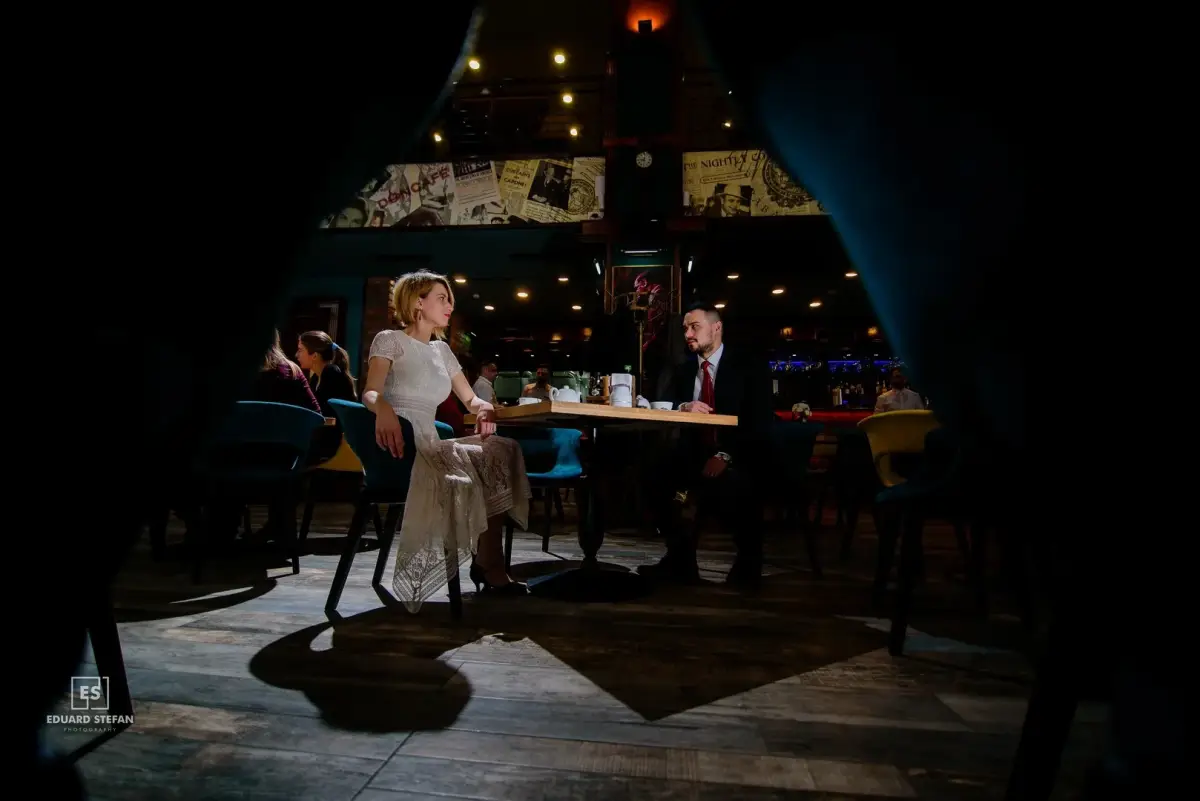
Candlelit receptions, moody bars, late-night dance floors: the most atmospheric moments are often the darkest. AI noise reduction has been one of the biggest leaps for wedding photography. Images shot in very little light can now come out clean while keeping fine detail in faces and fabric. The photo at the top of this post is exactly that kind of scene: dark, dramatic, and full of mood that I didn’t want to lose.
4. Retouching Is Getting Smarter, So Restraint Matters More
Removing a stray hair, a blemish or an exit sign in the background is now almost effortless. Generative tools can even fill in gaps that never existed. That power is exactly why restraint matters. My rule is simple: tidy distractions, never change who you are. You should look like you on your best day, not like a stranger with suspiciously perfect skin who also seems to have lost a cousin from the group photo.
5. The “Trend Look” Is Merging, and Fading Faster
AI presets make it easy for anyone to copy a popular style overnight. Heavy orange-and-teal, crushed blacks, ultra-airy pastels: they spread fast and date even faster. I think the real shift is the opposite of what you’d expect. Because anyone can apply a trend, a consistent, natural, true-to-colour edit is what makes photos feel timeless. Ask yourself whether you’ll still love the look in twenty years, not whether it’s trending this month.
6. What AI Can’t Do
AI can clean, select and sharpen. What it can’t do is know that your dad’s laugh is the moment you’ll treasure most, or that the slightly “imperfect” photo of you mid-giggle is better than the polished one. It wasn’t there. It didn’t feel the room. Choosing the moment, reading the light and deciding how a story should feel will always be a human job, and honestly, it’s the best part of mine.
“AI is a fantastic assistant in the editing room, but your story deserves a storyteller. The technology should disappear, so all you see is the moment.”
Final Thought: When you choose a photographer, ask how they edit, not just which tools they use. The right answer isn’t “no AI” or “all AI”. It’s someone who uses it to save time on the tedious parts, so they can spend that time making your photos feel exactly like the day felt.